

ICIA
INTERSTELLAR CRIMINAL INVESTIGATION AGENCY
"Justice Knows No Borders, No Planets."
AGENCY OVERVIEW
Mission & Core Objectives

The Interstellar Criminal Investigation Agency (ICIA) is the Lurran Consortium's principal interstellar criminal-investigation and criminal-intelligence organization. ICIA has at least 1.2 million agents and personnel distributed across Consortium space.
ICIA is not a military service. KAVOE supplies military force when a threat requires military action; ICIA develops criminal cases, follows people and networks, gathers and analyzes intelligence, preserves evidence, coordinates lawful enforcement, and supports prosecution.
CORE OBJECTIVES
Investigate criminal activity involving colonies, research facilities, stations, trade routes, spacecraft, orbital facilities, and interstellar transport.
Gather, analyze, preserve, and exchange criminal intelligence with legitimate planetary authorities, allied agencies, and authorized security organizations.
Support lawful arrests, warrants, evidence development, interjurisdictional investigations, and prosecution.
Coordinate with allied governments and Tauni civilizations when criminal conduct crosses political or species boundaries.
Distinguish criminal actors from the species, population, or government from which they originate, avoiding unnecessary diplomatic escalation.
HEADQUARTERS
Central Command

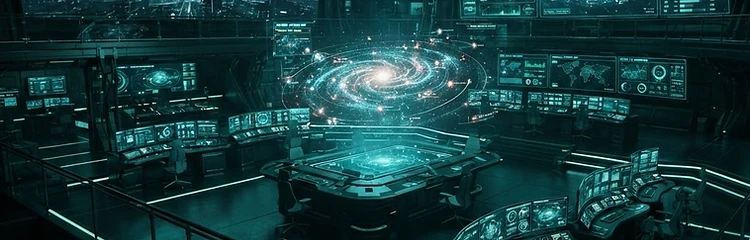
ICIA headquarters is on Beylth in the Gliese 357 system. The Beylth complex occupies approximately 18 square kilometers, with principal structures concentrated within a smaller inner security zone. The campus is divided into six major functional areas:
AREA 01
Central Command Complex
Principal headquarters structure, command coordination, senior leadership, and interagency liaison.
AREA 02
Intelligence Complex
Criminal intelligence analysis, the Intelligence Operations Center (IOC), and linkage of cross-regional investigations.
AREA 03
Forensic Sciences Complex
The rarest, most dangerous, and interregional forensic examinations, including Quantum Forensics Team operations.
AREA 04
Operations Complex
Active investigation coordination, operational planning, task group assembly, and field deployment support.
AREA 05
Logistics and Flight Complex
Vehicle and spacecraft maintenance, secure transport, evidence logistics, and supply chain management.
AREA 06
ICIA Academy
Primary training institution, physically adjacent but separated by its own security boundary.
CENTRAL COMMAND SECURITY ZONES
Public and controlled administrative areas.
Ordinary ICIA personnel areas.
Operational offices, active investigations, forensic laboratories, and restricted records.
Classified criminal intelligence, undercover identities, organized-crime intelligence, sensitive cyber investigations, and protected-source information.
Compartmented access for the most sensitive penetration operations, exceptionally dangerous technologies, high-level informants, and investigations whose disclosure could endanger entire networks. Access is compartment-specific.
PROFESSIONAL STRUCTURE
Command & Professional Titles
ICIA uses a deliberately shallow professional-grade system. All graduates enter as either Justicars or Veridans. Both professions use Grades III, II, and I. Praetor, Ordanus, Magistral, and Zenvorus are leadership appointments rather than permanent ranks.
Zenvorus
Agency HeadA unique appointed office. Only one serving Zenvorus heads ICIA at a time. The office carries authority over the entire agency and Central Command but is not a permanent professional grade.
Magistral
Regional CommandCommands one of ICIA's nine Regional Commands. Normally selected from experienced Ordanus personnel or senior Central Command leadership.
Ordanus
Planetary CommandCommands ICIA operations on an individual Consortium planet. Selected from experienced Justicar I or Veridan I personnel.
Praetor
Supervisory AppointmentA temporary supervisory appointment rather than a separate profession. May lead a major investigative section, laboratory, station office, or multiple Trinities.
JUSTICAR PROFESSIONAL GRADES
Fully qualified developing professional. May perform normal occupational duties and participate in investigations within the authorities of the assignment.
Experienced professional. May receive more sensitive assignments, mentor Grade III personnel, lead routine investigative activities, and qualify for specialist duties.
Senior professional. May lead major investigations, supervise Trinities or Veridan teams, serve as a senior instructor, and become eligible for senior command appointments.
Veridans use the same three-grade system (Veridan III, II, I). Promotion measures competence and experience — it does not automatically place the individual in management.
FIELD TEAMS
Trinities

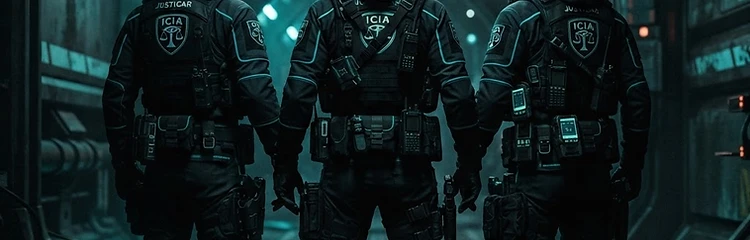
The standard Justicar field team is a Trinity: three Justicars assigned to work together. A Trinity provides a compact investigative unit able to divide interviews, surveillance, evidence work, scene security, and field decision-making.
ROLE 01
Primary Justicar
Coordinates the overall investigation. Maintains the developing case theory, assigns immediate tasks, leads major interviews, manages warrant and interagency coordination, and serves as the Trinity's principal operational spokesperson.
ROLE 02
Evidence Justicar
Takes primary responsibility for crime-scene integrity, evidence identification and collection, chain-of-custody coordination, investigative records, and liaison with Veridans and forensic laboratories.
ROLE 03
Field Justicar
Concentrates on surveillance, field security, searches, arrests, suspect movement, pursuit, transportation, tactical assessment, and liaison with STRU when threats escalate.
VERIDAN SPECIALIZATION FAMILIES
Veridans perform ICIA's technical, analytical, scientific, forensic, and intelligence work. ICIA recognizes eight major specialization families:
Forensic Sciences
Biology, chemistry, pathology support, materials, trace evidence, weapons examination, and related laboratory disciplines.
Criminal Intelligence
Criminal-network analysis, intelligence synthesis, organized crime, piracy, threat analysis, and linkage of information across investigations.
Cybernetic Systems
Network intrusion, digital evidence, automated systems, synthetic-system offenses, cybercrime, and technically complex electronic investigations.
Financial Forensics
Asset tracing, fraud, laundering, illicit transfers, shell organizations, procurement schemes, and financial reconstruction.
Records & Investigative Analysis
Case-record analysis, ICRN research, documentary reconstruction, cross-case linkage, warrant and records support, and large-scale investigative data analysis.
Xenoforensics
Nonhuman biology and anatomy, species-specific evidence, xenocultural evidentiary interpretation, and forensic questions requiring specialized knowledge of Tauni populations.
Quantum & Exotic Forensics
Quantum phenomena, unusual energy systems, advanced alien technology, high-energy evidence, and other technically exceptional evidence requiring specialized containment or interpretation.
Technical Reconstruction
Spacecraft systems, machinery, structures, damaged equipment, engineering-related evidence, accident reconstruction, and technical reconstruction of criminal events.
SELECTION & TRAINING
Recruitment & Academy

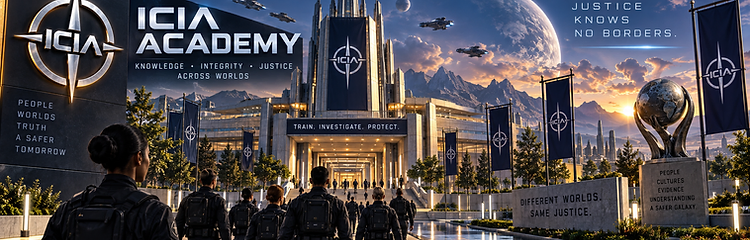
ICIA accepts candidates no younger than 23 years of age — no exceptions. Candidates must have completed ORG 2 before entering ICIA occupational training. The maximum selection score is 1,000 points; a candidate must earn at least 750 to remain eligible.
JUSTICAR MINIMUM
110 / 150
Physical entrance examination points
VERIDAN MINIMUM
90 / 150
Physical entrance examination points
Selection includes cognitive and investigative testing, HEILO scenario assessment, real-world psychological and social evaluation, neurological and operational-safety evaluation, and professional interview. No candidate may be rejected solely by an automated system.
52-WEEK ACADEMY PROGRAM
ICIA Foundations
Consortium criminal law, ICIA authority and limits, warrants, evidence preservation, chain of custody, professional ethics, suspect and victim rights, interstellar jurisdiction, report writing, records security, corruption awareness, and the division of responsibility between ICIA and KAVOE. Tauni cultural competence is a required subject and mandatory-pass graduation area.
Investigative Methods
Witness and suspect interviewing, crime-scene management, evidence chains, surveillance, criminal-intelligence analysis, financial records, missing-person investigations, spacecraft and cargo investigations, cyber awareness, undercover fundamentals, and forensic interpretation.
Occupational Tracks
Justicar-track: arrest and restraint, weapons qualification, tactical judgment, search procedures, surveillance, field interviewing, Trinity operations. Veridan-track: forensic science, records examination, criminal intelligence, data analysis, financial investigation, cyber investigation, evidence reconstruction, laboratory procedure.
Integrated Investigations
Increasingly complex HEILO and real-world exercises lasting from hours to weeks. Cases may contain misleading evidence, dishonest witnesses, innocent but unpleasant suspects, sympathetic guilty persons, conflicting testimony, cultural misunderstandings, and evidence that disproves an investigator's original theory.
Supervised Field Training
12-week field phase inside functioning ICIA operations. Justicar trainees accompany experienced Justicars on real investigations under restricted authority. Veridan trainees work in functioning forensic, intelligence, analytical, cyber, financial, or records units.
Final Qualification
Written and practical examinations, a comprehensive case exercise, review of field-training performance, professional conduct, and instructor evaluations. Graduation requires at least 80 percent overall and 70 percent in every major instructional area. Mandatory-pass subjects include ethics, evidence handling, lawful authority, safety, psychological fitness, and Tauni cultural competence.
EDUCATION NETWORK
Regional Training Centers
Terran Training Center
Terra, Sol
Law, interagency cooperation, financial crime, and diplomatic coordination.
Selene Training Center
Selene, Ross 128
Cybercrime, financial investigations, and undercover operations.
Amphitrite Training Center
Amphitrite, YZ Ceti
Smuggling, piracy, cargo inspection, and spacecraft-boarding investigations.
Hyperion Training Center
Hyperion, HD 20794
Forensics, evidence processing, and major-case investigation.
Thalassa Training Center
Thalassa, Wolf 1069
High-risk field investigation, survival, and remote-colony crime.
Thalia Training Center
Thalia, Gliese 12
Xenocrime, alien law and customs, and diplomatic investigations.
Eos Training Center
Eos, LHS 1140
Surveillance, fugitive tracking, and undercover fieldcraft.
Sudana Training Center
Sudana, Kepler-186f
Interstellar investigations, communications, and complex multi-region cases.
FIELD NETWORK
Regional Command Network


ICIA maintains nine Regional Commands on Consortium-controlled Green, Blue, or Amber worlds. Each is commanded by a Magistral. An Ordanus remains responsible for ICIA operations on every Consortium planet. Every Regional Command world also contains an ICIA detention center — short-term judicial-assessment centers, not long-term prisons.
Terran
Terra, Sol
GreenSelene
Selene, Ross 128
BlueAmphitrite
Amphitrite, YZ Ceti
BlueHyperion
Hyperion, HD 20794
BlueThalassa
Thalassa, Wolf 1069
BlueThalia
Thalia, Gliese 12
BlueEos
Eos, LHS 1140
BlueSudana
Sudana, Kepler-186f
BlueClymene
Clymene, Kepler-22
AmberINVESTIGATIVE COMPONENTS
Operational Components

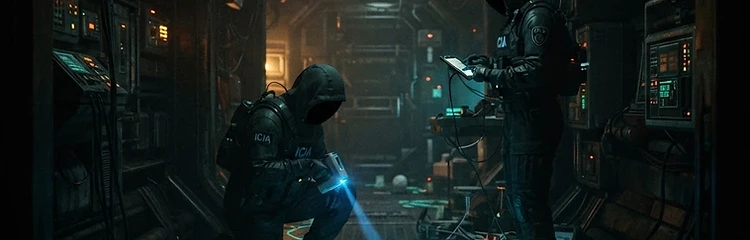
CORE OPERATIONAL COMPONENTS
Xenocrime Unit
Investigates crimes involving, targeting, exploiting, trafficking, or victimizing Tauni and other nonhuman persons or species.
Cybernetic Crime Division
Investigates hacking, network intrusion, cybercrime, synthetic-system offenses, and crimes involving advanced automated systems or machine intelligences. Conscious Senticoms are treated as persons, not software.
Anti-Smuggling & Piracy Unit
Targets contraband networks, organized smuggling, piracy, illegal trafficking, black-market transport, and the logistical and financial structures that support criminal syndicates.
Read the Piracy Threat AssessmentQuantum Forensics Team
Handles evidence and incidents involving advanced physical or quantum phenomena beyond conventional forensic capability.
MAJOR DIRECTORATES
Organized Crime Directorate
One of ICIA's largest investigative organizations. Concentrates on enduring criminal enterprises rather than isolated offenses: criminal syndicates, pirate-support networks, organized smuggling structures, enterprise intelligence, infiltration, and criminal-network analysis.
Financial Crimes Division
Investigates laundering, fraud, embezzlement, illicit transfers, shell corporations, and criminal asset concealment. Its Asset Tracing Section specializes in following uhtzas through complex networks of worlds, corporations, and transactions.
Interstellar Trafficking Division
Investigates trafficking in persons, forced labor, illegal transport of sentient beings, exploitation of vulnerable populations, and illegal biological trafficking. Maintains unusually strong xenocultural expertise.
Controlled Substances Division
Addresses illegal manufacture, distribution, transport, and diversion of synthetic psychoactives, neurological compounds, alien intoxicants, performance-enhancing compounds, and engineered organisms.
Major Case Directorate
Coordinates or assumes investigations whose scale, complexity, sensitivity, or interregional character exceeds ordinary planetary case management. May create temporary Major Case Task Groups combining multiple specialties.
Protected Persons Service
Operationally separated from investigators. Conducts threat assessment, emergency protection, secure transportation, identity protection, and permanent relocation. Uses three protection levels (Status I, II, III).
Office of Professional Integrity
Institutionally independent. Investigates corruption, bribery, evidence fabrication, unlawful surveillance, abuse of authority, and criminal conduct by ICIA personnel. Headed by the Custodian General with authority to investigate all levels including the Zenvorus.
LEGAL AUTHORITY
Jurisdiction & Warrants
ICIA possesses strong interstellar criminal-investigative authority throughout Lurran Consortium territory, but planetary governments retain meaningful local jurisdiction. ICIA authority is broad without constituting unrestricted police power.
Planetary Warrant
Issued under the law of a particular Consortium world. Primarily authorizes enforcement within that jurisdiction. Requires recognition by the destination world's judicial authority before arrest outside the issuing jurisdiction.
Consortium Warrant
Issued by an authorized Consortium judge. Valid throughout Consortium-controlled worlds, stations, vessels, and facilities. May permit arrest, search and seizure, specified surveillance, restraint of financial assets, or seizure of a vessel or cargo.
Emergency Warrant
When delay creates a serious investigative or public-safety risk, ICIA may seek an authenticated Emergency Warrant remotely from an authorized judge. Expires after 48 hours unless lawfully extended or replaced.
Hot pursuit that begins within Consortium territory does not terminate when a suspect crosses into another Consortium planetary jurisdiction — but it does not authorize entry into sovereign non-Consortium territory. Emergency action without a warrant is permitted when there is an immediate threat to life, a violent suspect is actively fleeing, or evidence faces imminent destruction.
INTEGRITY
Evidence & Forensics

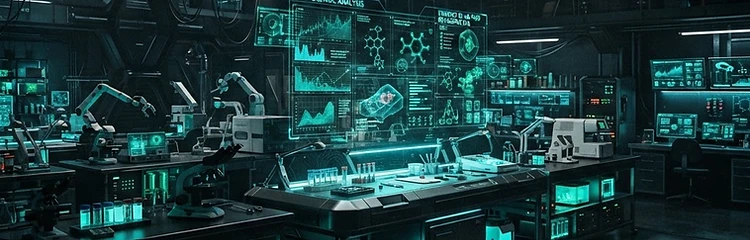
Every evidentiary item entering ICIA custody receives a unique Interstellar Evidence Identifier (IEI). The IEI record follows the evidence throughout its evidentiary life. ICIA recognizes five broad evidentiary classes:
Physical & Biological Evidence
Tangible items, biological samples, weapons, fibers, and material traces from crime scenes.
Digital Evidence
Electronic records, communications data, system logs, and information from seized devices or networks.
Financial & Documentary Evidence
Financial records, transactions, contracts, and documentary materials relevant to criminal investigations.
Quantum & High-Energy Evidence
Evidence involving quantum phenomena, exotic energy systems, advanced alien technology, or high-energy devices requiring specialized containment.
Testimonial & Intelligence-Derived Evidence
Witness statements, informant testimony, and intelligence-derived information that may justify further investigation.
ICIA operates a three-tier forensic network: Planetary Forensic Offices for routine intake, Regional Forensic Laboratories at all nine Regional Commands, and the Central Forensic Sciences Complex on Beylth for the rarest and most dangerous examinations.
FORCE DOCTRINE
Weapons & Tactical Response


Kertikron Precision Enforcement Pistol (KPE)
The standard Justicar service pistol. Engineered for exceptionally fine energy control and graduated force rather than battlefield firepower. Most settings are nonlethal; retains a lethal setting for immediate-threat situations. Records the authorized operator, time of discharge, selected setting, and discharge count.
Standard ICIA Vertikron Rifles
Single-shot rifles for operations where a service pistol is insufficient. Each trigger action produces one discharge. Provides Incapacitation, Heavy Incapacitation, Critical Defense, and Lethal settings. Not routine patrol weapons — issued when an operational threat assessment justifies them.
Rapid-Fire Weapons Restriction
Standard ICIA personnel are prohibited from carrying rapid-fire weapons during ordinary operations. Burst-capable or automatic Vertikron weapons are restricted to the Special Tactics Response Unit (STRU).
SPECIAL TACTICS RESPONSE UNIT
Special Tactics Response Unit (STRU)
ICIA's specialized civilian high-risk tactical organization. Responds to armed barricades, hostage incidents, exceptionally dangerous arrests, terrorist incidents, assaults on fortified criminal facilities, and emergencies where waiting for military assistance would create immediate unacceptable danger. A permanent STRU detachment is maintained at Central Command and each Regional Command. A normal tactical team consists of approximately eight Justicars.
STRU remains a civilian law-enforcement capability. When an operation requires combat against warships or major pirate fleets, KAVOE supplies the military force while ICIA retains responsibility for criminal investigation, evidence, and prosecution support.
IDENTIFICATION
Uniforms & Credentials
Standard Duty Uniform
Dark charcoal gray with deep-blue elements and silver insignia, deliberately distinct from KAVOE military colors. Worn at Central Command, Regional Commands, Academy facilities, official inspections, and prisoner transfers. Justicars and Veridans use the same basic uniform.
Field Professional Dress
Permits Justicars and Veridans to wear ordinary civilian clothing appropriate to the world, culture, and investigation. Authorized personnel may wear concealable protective armor and carry a concealed KPE pistol when lawful and operationally appropriate.
Tactical Uniforms
Used primarily by STRU and other specifically authorized high-risk personnel. Incorporates conspicuous ICIA identification with Tactical Response Armor.
SECURITY CLEARANCES
Clearance level alone never grants universal access. Personnel must also possess a legitimate operational need to know and authorization for the relevant compartment.
Public and controlled administrative access.
Ordinary ICIA personnel access.
Operational offices, active investigations, forensic laboratories, and restricted records.
Classified criminal intelligence, undercover identities, and protected-source information.
Compartmented access for the most sensitive operations. Clearance level alone never grants universal access — personnel must also possess a legitimate operational need to know.
INFORMATION SYSTEMS
ICRN & Field Technology


ICIA's principal information architecture is the Integrated Criminal Records Network (ICRN) — a federated secure network rather than a single unrestricted database. It links authorized planetary offices, Regional Commands, Central Command, forensic laboratories, PPS facilities, ICIA spacecraft, and approved external systems.
Justicars use a standardized Field Investigation Kit with a secure communicator, credential reader, compact evidence scanner, evidence seals, biological and material sampling equipment, environmental sensors, and recording equipment. Field pads linked to ICRN can retrieve warrants, verify credentials, create IEI records, and document scenes.
Technology doctrine: Technology may assist observation, authentication, preservation, communication, and analysis. It does not replace accountable investigative judgment. Human personnel remain responsible for lawful decisions, evidentiary conclusions, use of force, arrests, and the presentation of investigative findings.
POST-CONVICTION
Corrections & Custody

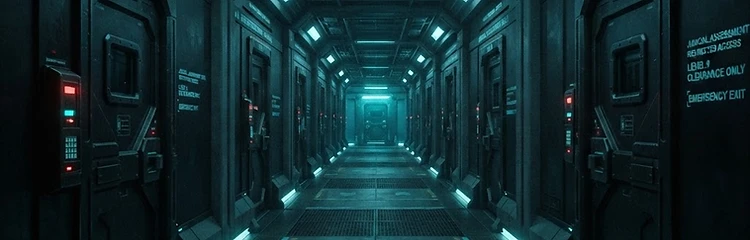
ICIA investigates crimes and maintains temporary judicial-assessment detention, but it does not operate the Consortium's long-term prison system. Once a court imposes a custodial sentence, responsibility transfers to the Consortium Corrections Authority (CCA) — part of the civilian judicial system, not subordinate to ICIA or KAVOE.
Low-risk prisoners suitable for ordinary correctional facilities with standard security.
Moderate-risk prisoners requiring enhanced security measures.
High-risk prisoners housed in Central Security Institutions rather than ordinary planetary facilities.
Rare classification for prisoners whose risks exceed ordinary correctional infrastructure. Does not automatically constitute harsher punishment — indicates specialized precautions are necessary.
The Lurran Consortium does not use capital punishment. Extremely dangerous offenders may remain in C3 or C4 custody for life, but the state does not impose death as a criminal sentence.
Reader Discussion
0 comments
No comments yet. Be the first to discuss this story.

