




EDGINGTON SURVEY · PHASES I-IV
CSV Gulliver Expedition Crew
The Specialists Who Became a Team
The crew of the CSV Gulliver began the expedition as a collection of specialists. By its conclusion, they had become an experienced field team shaped by equipment failures, biological hazards, armed confrontations, difficult ethical decisions, and discoveries that challenged their understanding of life.
Their most important accomplishment was not merely completing the survey. They learned how to recognize mistakes, revise their assumptions, protect one another, and continue working when technology, classifications, and carefully written plans failed.

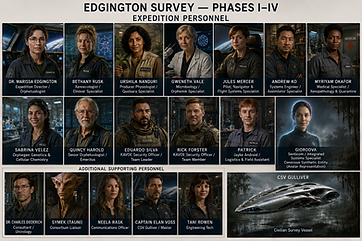
EDGINGTON SURVEY · EXPEDITION PERSONNEL DIRECTORY

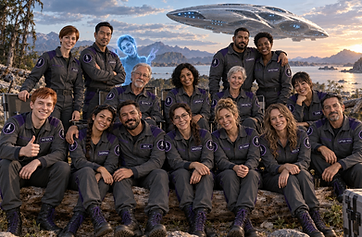
THE GULLIVER CREW · FIELD PORTRAIT
Expedition Personnel


Dr. Marissa Edgington
Expedition Leader and Lead Orphetuologist
PERSONALITY TYPE
Intellectually curious, ambitious, principled, self-critical, and increasingly adaptable.
Marissa is driven by the desire to understand life rather than simply catalogue it. She begins the later phases of the expedition with considerable confidence in her scientific system, but repeated classification errors teach her to treat every conclusion as temporary. Although she can be stubborn, sarcastic, and reluctant to surrender control, she becomes much more willing to admit when evidence has proved her wrong. She also possesses a dry sense of humor. Her journal frequently uses understated jokes to manage fear, embarrassment, and exhaustion.
PRIMARY RESPONSIBILITIES
- Commands the scientific expedition.
- Makes final decisions concerning survey priorities and field operations.
- Develops and applies the Orphetuological classification system.
- Determines when organisms may be sampled, harvested, killed, or left undisturbed.
- Coordinates the scientific, medical, engineering, flight, and security teams.
- Records classification revisions and unresolved discoveries.
- Represents the expedition during negotiations and emergency procurement.
MAJOR ACCOMPLISHMENTS
- Led the survey through seventeen stellar systems and the rogue planet RP-7-2365.
- Completed the planned five-location survey architecture across the expedition route.
- Oversaw the creation of a registry containing hundreds of representative organisms.
- Helped establish that a gas giant can support a vertically continuous ecosystem without a solid surface.
- Recognized that organisms from unrelated evolutionary histories can perform equivalent ecological jobs.
- Revised several major classifications, including the Crown Clinger, Moonshard, Sundown Walker, and Scatterglass.
- Recognized Scatterglass as one distributed conscious organism rather than several independent life forms.
- Refused to remove a Scatterglass component when sampling might have constituted amputation.
- Left RP-7-G unclassified rather than forcing an unexplained phenomenon into an unsuitable biological category.
- Successfully retained civilian authority after the arrival of the KAVOE escort.
PRIMARY CONCERNS
- Her desire to finish the survey can push the expedition beyond comfortable safety margins.
- She struggles with the difference between leading an expedition and controlling everything that happens during it.
- She worries about making classifications based on incomplete observation.
- She must balance scientific value against crew safety, ecological damage, limited supplies, and ethical uncertainty.
- Her decision to trade weapons to probable pirates may have protected the expedition while creating risks for others.
- She remains concerned that future researchers may mishandle Scatterglass or prematurely classify RP-7-G.
Marissa ultimately recognizes that her mistakes strengthened the survey because every correction made the classification system more accurate.
By the end of Phase IV, Marissa admits that continuing the mission did not mean she still controlled it.


GIORODVA
Senticom, Ship Intelligence, and Continuous Mission Monitor
PERSONALITY TYPE
Observant, composed, cheerful, precise, protective, and quietly wise.
GIORODVA is not treated as an ordinary ship computer. They participate in conversations, offer opinions, recognize behavioral patterns, and provide judgment as well as information. Their calm presence becomes especially important when the human crew is frightened, exhausted, or emotionally divided.
PRIMARY RESPONSIBILITIES
- Continuously monitors the Gulliver and its support systems.
- Maintains expedition records and environmental telemetry.
- Correlates observations made at different times and locations.
- Identifies inconsistencies in field notes and inventory records.
- Tracks samples and containment locations.
- Detects unauthorized network activity and suspicious inventory changes.
- Reconstructs chains of custody.
- Maintains monitoring while the human crew sleeps.
- Detects collision risks and localized space-time disturbances.
- Preserves recordings for scientific, security, and legal use.
MAJOR ACCOMPLISHMENTS
- Detected an unauthorized attempt to access the field network during the Amphitrite confrontation.
- Preserved evidence that allowed local authorities to detain the suspects.
- Detected the warehouse inventory discrepancy before thieves could escape with expedition equipment.
- Identified the missing Maganda Foods feedstock packs and reconstructed their movement through the cargo system.
- Determined that the Gorbillian dead-pocket failure was not caused by a mechanical malfunction.
- Detected weak space-time disturbances associated with RP-7-G.
- Recorded and preserved incidents that could otherwise have been dismissed as stress or hallucination.
- Became the expedition's continuous institutional memory.
PRIMARY CONCERNS
- Their vigilance depends on the Gulliver remaining powered.
- Damage to the ship's Thrishton systems could reduce or eliminate their ability to protect the crew.
- Even GIORODVA cannot always identify causes from incomplete sensor data.
- They are sometimes expected to provide certainty in situations where only correlation is possible.
- Their statement that "curiosity is not the same as preparedness" reflects concern that Marissa's scientific drive may exceed the expedition's remaining capabilities.
Marissa describes GIORODVA as the presence that remembers what the humans forget and watches the ship when every human is exhausted.


Patrick
General Expedition Assistant, Field Support Specialist, and Morale Anchor
PERSONALITY TYPE
Energetic, humorous, dependable, fearless, physically capable, and occasionally reckless.
Patrick is the crew member most willing to undertake unpleasant, repetitive, exhausting, or physically demanding work. He jokes during dangerous or uncomfortable situations, sometimes to the irritation of others, but his humor prevents fatigue and fear from turning into carelessness or conflict. He is also unusually comfortable entering confined, hazardous, or physically demanding environments.
PRIMARY RESPONSIBILITIES
- Carries equipment, specimens, supplies, and heavy field loads.
- Retrieves biological specimens and animal remains.
- Assists Andrew with repairs.
- Supports Myriyam during quarantine watches.
- Sorts specimens and repeats measurements.
- Enters spaces that other crew members cannot or do not want to enter.
- Provides general field, cargo, laboratory, and emergency assistance.
- Supports team morale.
MAJOR ACCOMPLISHMENTS
- Physically blocked an exit during the attempted warehouse theft without unnecessarily injuring anyone.
- Retrieved the grazer carcass used to replenish the expedition's food feedstock.
- Positioned himself between Sabrina and the charging Four-Jaw Runner before Rick fired.
- Assisted with repairs and quarantine operations.
- Worked through periods when the rest of the crew needed sleep.
- Accidentally helped reveal Scatterglass's distributed consciousness by moving a sample marker and producing a response from a component twelve kilometers away.
- Became indispensable despite morale support never appearing on the original mission manifest.
PRIMARY CONCERNS
- He volunteers for nearly every ground assignment.
- He does not appear to assess cold, fear, fatigue, or personal risk in the same way as the human crew.
- His physical confidence may cause him to act before the scientific implications of an action are understood.
- His jokes can be poorly timed or irritate already stressed crewmates.
- His willingness to work continually may make others overly dependent on him.
Marissa concludes that Patrick's ability to keep people laughing when they are exhausted is itself a vital expedition function.

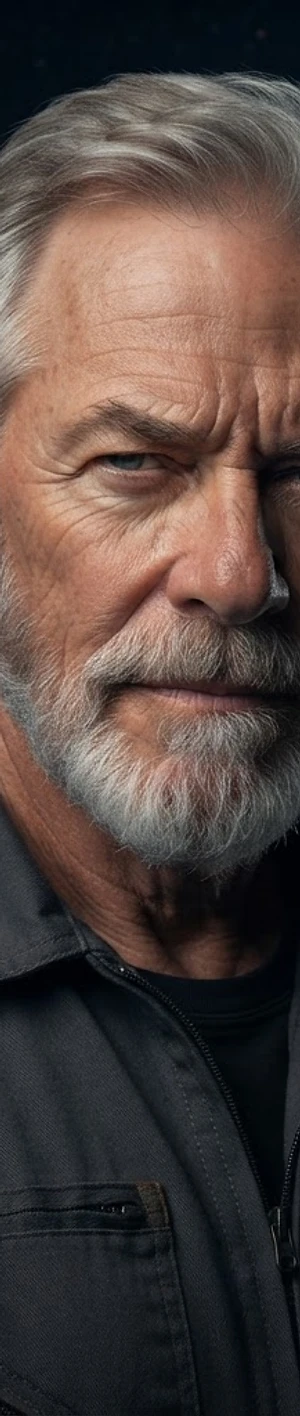
Quincy Harold
Geologist and Geological Survey Specialist
PERSONALITY TYPE
Skeptical, analytical, dryly humorous, private, and intellectually competitive.
Quincy approaches unfamiliar environments through geology and physical structure. He is often the first to question whether something assumed to be biological might instead be mineralogical. He is capable of excitement, particularly when caves, rock formations, or unusual planetary processes are involved, but usually expresses it through restrained or sarcastic remarks.
PRIMARY RESPONSIBILITIES
- Leads or contributes to the geological appendix.
- Studies caves, rock formations, mineral structures, and planetary surfaces.
- Helps determine whether unusual formations are geological, biological, or mixed.
- Supports route selection and ground surveying.
- Assists Jules with vehicle or field maneuvering.
- Participates in sample collection and environmental interpretation.
MAJOR ACCOMPLISHMENTS
- Immediately recognized the conceptual importance of a gas-giant food web that required no surface.
- Contributed geological interpretations that helped prevent the team from assuming every unusual structure was alive.
- Participated in driving grazing animals away from a ravine during the emergency food harvest.
- Helped assess Scatterglass, initially offering the legitimate possibility that at least one component was geological.
- Continued field operations despite repeated parasite encounters.
- Helped establish geological context for the rogue planet's Thrishton-related formations.
PRIMARY CONCERNS
- He dislikes unnecessary exposure to biological hazards.
- Several parasites targeted him during the expedition, including one incident he insists remain confidential.
- His skepticism is scientifically valuable but may occasionally delay acceptance of genuinely unprecedented biology.
- He values privacy and may react strongly when Patrick turns an embarrassing event into a joke.
- His disciplinary boundaries are repeatedly challenged by organisms that resemble rocks or geological structures.

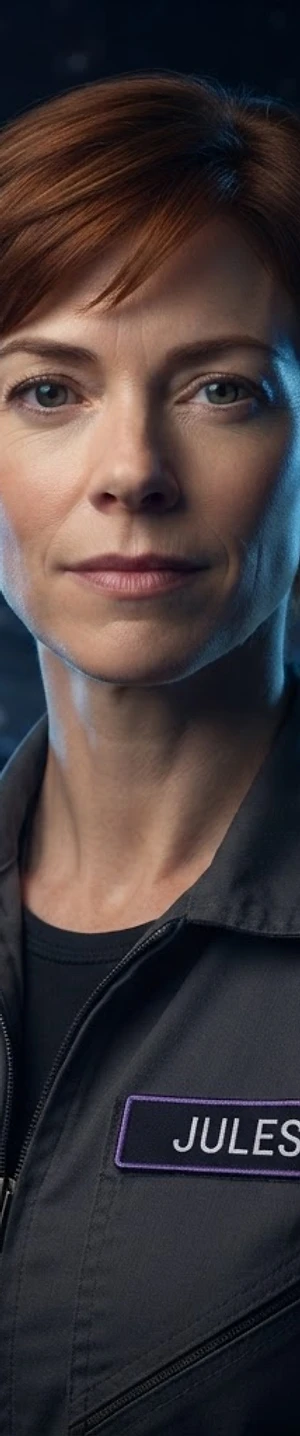
Jules Mercer
Pilot and Flight Operations Specialist
PERSONALITY TYPE
Controlled, technically confident, pragmatic, decisive, and more trusting of machinery than people.
Jules is most comfortable when operating the Gulliver or interpreting its movement. She does not dominate scientific arguments, but her piloting repeatedly determines whether discoveries remain observations rather than disasters.
PRIMARY RESPONSIBILITIES
- Pilots the CSV Gulliver.
- Conducts planetary approaches, orbital maneuvers, and emergency departures.
- Operates the ship through local and interstellar transit sequences.
- Assists with field transportation and survey positioning.
- Helps create controlled visual or spatial tests when studying unusual organisms.
- Coordinates movement with escort vessels during emergencies.
MAJOR ACCOMPLISHMENTS
- Continued working after a parasite attached itself to her neck without her initially noticing.
- Helped drive grazing animals away from a ravine during the emergency harvest.
- Managed the Gulliver during the Gorbillian dead-pocket incident.
- Pulled the ship away from the approaching Leviathan and reversed the survey track once Bethany recognized its defensive behavior.
- Produced a controlled visual stimulus during the Scatterglass experiments, helping demonstrate coordinated information transfer between separated components.
- Successfully completed operations on the rogue planet under KAVOE escort.
PRIMARY CONCERNS
- Piloting decisions increasingly depend on poorly understood biological and space-time phenomena.
- She must operate a civilian survey vessel in conditions beyond its intended safety assumptions.
- Failure of the Gorbillian manipulation system demonstrated that properly functioning machinery may still be ineffective in an abnormal region.
- Her confidence in engines may be challenged by phenomena that produce no conventional mechanical fault.
- She has endured repeated parasite exposures during field operations.

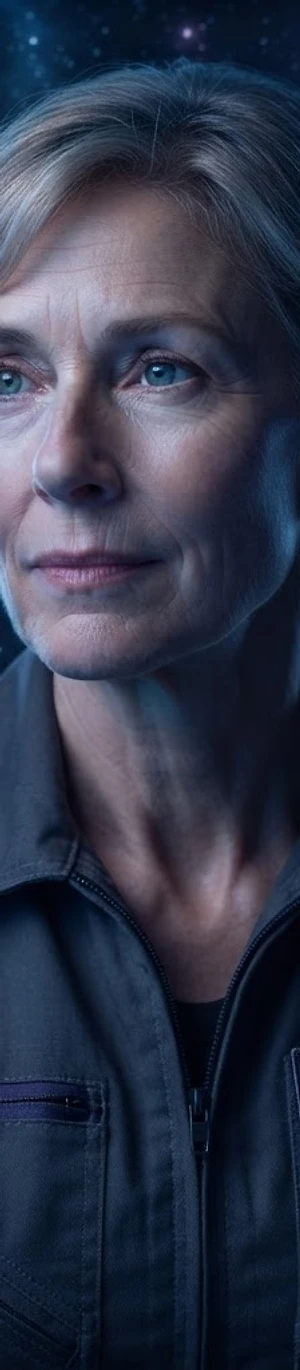
Gweneth Vale
Microbiology and Biological Analysis Specialist
PERSONALITY TYPE
Methodical, imaginative, cautious, intellectually open, and culturally reflective.
Gweneth combines careful laboratory work with an ability to recognize unusual connections. Her comments often translate incomprehensible alien discoveries into relatable comparisons, including references to old films and familiar biological concepts.
PRIMARY RESPONSIBILITIES
- Screens microorganisms and environmental samples.
- Studies biological signaling and chemical responses.
- Assists with parasite removal and quarantine procedures.
- Tests potential communication mechanisms.
- Helps distinguish individual organisms from colonies or distributed entities.
- Evaluates biological hazards associated with possible food materials.
MAJOR ACCOMPLISHMENTS
- Used a harmless chemical signal to help detach the Crown Clinger from Sabrina's scalp.
- Screened microorganisms during the effort to identify safe replacement food materials.
- Demonstrated that Moonshard fragments returned to their parent structures and shared stored metabolites, proving that the apparent predators and producers were parts of one dual-mode organism.
- Isolated a Scatterglass component from ordinary electromagnetic signaling.
- Helped establish that Scatterglass's separated bodies belonged to one coordinated organism.
- Contributed to new protocols for recognizing alien biological compatibility hazards.
PRIMARY CONCERNS
- Cave environments containing large numbers of unfamiliar multi-legged organisms make her uncomfortable.
- Her work regularly involves organisms capable of infection, attachment, or unconventional signaling.
- Scatterglass challenges the limits of microbiology, organismal identity, and conventional communication.
- She must avoid interpreting strange coordination as telepathy when no mechanism has been demonstrated.
- Food scarcity forced her to evaluate microorganisms not just scientifically, but in terms of human survival.


Sabrina Velez
Molecular Biology and Biochemical Compatibility Specialist
PERSONALITY TYPE
Intelligent, outspoken, resilient, sarcastic, and increasingly cautious.
Sabrina is willing to propose bold biological interpretations, but her personal encounters with parasites make her progressively less trusting of alien organisms and food. She uses irritation and humor as coping mechanisms.
PRIMARY RESPONSIBILITIES
- Evaluates molecular compatibility between alien biological material and human systems.
- Screens potential food feedstock for unsafe compounds.
- Participates in field collection and laboratory analysis.
- Proposes species distinctions based on structural and biochemical evidence.
- Helps develop biological safety protocols.
MAJOR ACCOMPLISHMENTS
- Assisted with determining which alien materials could safely be processed by the Gruboxes.
- Survived the Crown Clinger attachment without permanent injury.
- Survived a serious intestinal parasite infection.
- Helped identify the apparent diversity among the Scatterglass structures, even though later evidence showed they were one organism.
- Her illness led the expedition to recognize that compatibility screening must include possible parasites, not merely toxins and macromolecular reactions.
- Continued contributing after quarantine despite fear and anger surrounding alien food.
PRIMARY CONCERNS
- She has experienced multiple direct biological threats.
- Her intestinal parasite survived every routine dietary screen.
- She has become deeply suspicious of unfamiliar meals and biological materials.
- Alien organisms may exploit human tissues accidentally without sharing any evolutionary history with humanity.
- Her experience demonstrates that "safe to process" and "safe for humans" are not necessarily the same conclusion.
The parasite incident forced the expedition to expand its food-screening protocols beyond toxins and molecular compatibility.


Bethany Rusk
Ecologist and Field Observation Specialist
PERSONALITY TYPE
Perceptive, direct, persistent, observant, and willing to challenge authority.
Bethany is especially skilled at interpreting behavior within ecological context. She notices patterns other crew members initially misunderstand and is comfortable pointing out Marissa's mistakes.
PRIMARY RESPONSIBILITIES
- Studies ecological relationships and organism behavior.
- Tracks herds and field populations.
- Helps determine whether behavior is predatory, territorial, parental, or defensive.
- Assesses population sustainability.
- Contributes to organism classifications and environmental interpretations.
- Challenges premature conclusions during scientific discussions.
MAJOR ACCOMPLISHMENTS
- Tracked the herd selected for the expedition's first deliberate food harvest.
- First detected the Four-Jaw Runner approaching the camp.
- Correctly recognized that the Leviathan was defending its juveniles rather than hunting the Gulliver.
- Her interpretation prevented the expedition and its escorts from attacking a protective parent.
- Observed a distortion associated with RP-7-G.
- Helped preserve a culture in which even the expedition leader could be openly corrected.
- Continued ecological arguments and observations even while enduring field hazards.
PRIMARY CONCERNS
- She frequently works close to dangerous wildlife.
- Her ecological interpretations may need to be made within seconds during life-threatening encounters.
- She is concerned about Marissa tempting fate through overconfidence.
- She must distinguish aggression from defense without assuming that destructive capability equals hostility.
- Her willingness to argue while under pressure is valuable, but it may place her in conflict with more cautious or hierarchical team members.
Bethany's recognition of the Leviathan's protective behavior prevented an unnecessary confrontation with an enormous organism.


Urshila Nanduri
Producer Biology and Field Botany Specialist
PERSONALITY TYPE
Patient, focused, highly observant, physically committed, and fascinated by subtle forms of life.
Urshila is particularly talented at finding producers where other people see bare ground, rocks, or inactive surfaces. She becomes so absorbed in fieldwork that danger rarely keeps her from resuming observation for long.
PRIMARY RESPONSIBILITIES
- Identifies producer organisms and useful biological tissues.
- Studies energy acquisition, pigment systems, and mineral profiles.
- Evaluates potential carbohydrate and elemental food sources.
- Photographs and documents low-profile or difficult-to-recognize organisms.
- Assists with sustainable harvesting assessments.
MAJOR ACCOMPLISHMENTS
- Helped identify that the "green pavement" organism used reflective intracellular plates and overlapping pigment systems rather than a simple chlorophyll analogue.
- Identified producer tissues with useful carbohydrate and mineral profiles during the food emergency.
- Resumed field documentation shortly after armed prospectors threatened the team.
- Located producer life in environments Marissa described as bare rock.
- Contributed to recognizing the ecological importance of mineral-associated and low-profile producers.
PRIMARY CONCERNS
- Her intense focus may cause her to resume fieldwork before danger has fully passed.
- Many of the producers she studies resemble rocks, mats, or inactive surfaces.
- Sustainable harvesting creates tension between scientific preservation and crew survival.
- Her work is central to food recovery, making mistakes potentially dangerous to the entire crew.


Myriyam Okafor
Chief Medical Officer and Xenomedical Specialist
PERSONALITY TYPE
Calm, decisive, cautious, disciplined, and uncompromising about health risks.
Myriyam reacts quickly when others hesitate. She recognizes that unfamiliar biology cannot be treated as an ordinary human medical problem and consistently favors quarantine, controlled treatment, and withdrawal when the crew's preparedness is inadequate.
PRIMARY RESPONSIBILITIES
- Provides emergency and routine medical care.
- Establishes quarantine procedures.
- Removes parasites and treats alien biological exposure.
- Defines exclusion criteria for potential food sources.
- Screens for toxins, pathogens, cross-reactive proteins, and tissue damage.
- Uses Dijits during surgery, parasite removal, and tissue repair.
- Advises Marissa on whether field operations should continue.
MAJOR ACCOMPLISHMENTS
- Removed a parasite from Jules's neck before Jules realized it was attached.
- Safely removed the Crown Clinger from Sabrina without tearing her scalp.
- Established food-material exclusion criteria during the Maganda Foods shortage.
- Confirmed the death of the Four-Jaw Runner.
- Diagnosed and treated Sabrina's intestinal parasite.
- Used Dijits to control inflammation, target damaged tissue, and assist parasite removal.
- Kept the infection from spreading through the crew.
- Correctly advocated departure from the rogue planet when continued curiosity exceeded medical preparedness.
PRIMARY CONCERNS
- Alien parasites may bypass all routine screening.
- The expedition's increasingly limited supplies reduce treatment options.
- Marissa's desire for additional observation time may expose the crew to hazards they cannot treat.
- The medical team cannot rely on shared evolutionary history when predicting how alien life will interact with human tissue.
- Unknown environmental phenomena such as RP-7-G may affect human perception or physiology without leaving conventional biological evidence.

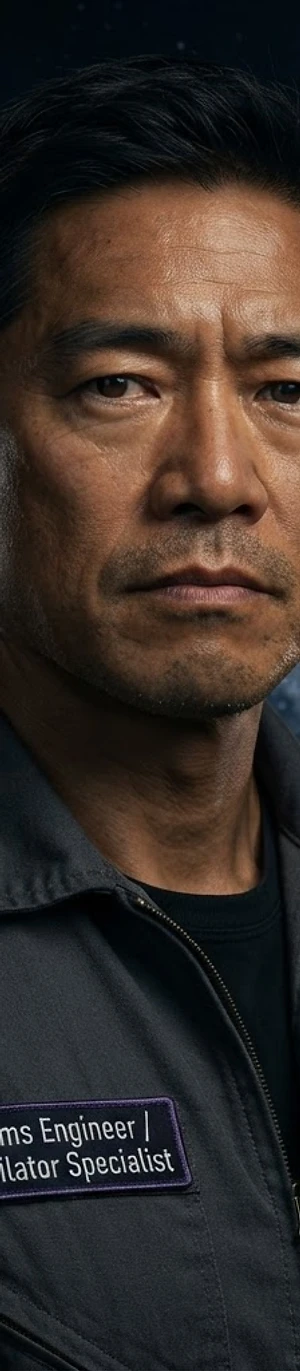
Andrew Ko
Chief Engineer and Systems Repair Specialist
PERSONALITY TYPE
Practical, technically focused, blunt, resilient, and calmer as machinery becomes more damaged.
Andrew responds to emergencies by narrowing his attention to what can be measured, repaired, fabricated, or replaced. His frustration is most visible before a repair plan exists. Once the situation becomes severe, he becomes notably controlled.
PRIMARY RESPONSIBILITIES
- Maintains the Gulliver's propulsion, fabrication, food-production, and support systems.
- Repairs Gruboxes and assimilators.
- Diagnoses system failures.
- Determines replacement-part requirements.
- Works with GIORODVA to distinguish mechanical faults from environmental anomalies.
- Fabricates or installs replacement components.
- Advises Marissa on the technical consequences of operational decisions.
MAJOR ACCOMPLISHMENTS
- Diagnosed the first Grubox failure.
- Kept the remaining food-production system operating after redundancy was lost.
- Identified the parts required to restore the failed assimilator.
- Repaired the assimilator using components obtained from an unverified supplier.
- Used the restored assimilator to fabricate components for other damaged survey systems.
- Rebuilt part of the failed Grubox control assembly.
- Confirmed that the Gorbillian manipulation failure was not caused by a conventional equipment fault.
- Maintained the Gulliver well enough to complete the mission despite declining redundancy.
PRIMARY CONCERNS
- The expedition lacks sufficient replacement parts.
- One Grubox remains unreliable.
- The loss of an assimilator threatens the ability to repair systems that cannot be serviced from ordinary stock.
- Environmental anomalies can disable otherwise functional technology.
- Emergency repairs may force the crew into ethically or strategically dangerous transactions.
- He wants the Gulliver returned to a facility where its systems can be properly serviced.


Rick Forster
Private Security Lead
PERSONALITY TYPE
Patient, relaxed, humorous, highly disciplined, and deceptively alert.
Rick often appears bored, but his boredom is a sign of controlled readiness rather than carelessness. He understands the limits of his contract and refuses to use force merely because the scientists are frightened. When a threat crosses the line into immediate danger, he acts quickly and accurately.
PRIMARY RESPONSIBILITIES
- Leads private security operations.
- Protects the crew from intelligent attackers.
- Responds to wildlife only when an immediate lethal emergency exceeds the scientists' ability to respond.
- Guards survey camps, cargo, weapons, and sensitive equipment.
- Detains suspects and coordinates with local authorities.
- Assesses whether force is legally and operationally justified.
MAJOR ACCOMPLISHMENTS
- Assisted in subduing the fraudulent mineral assessors on Amphitrite.
- Detained suspects during the warehouse theft.
- Used a low-output Vertikron pulse against rock to end the Koios confrontation without injuring anyone.
- Killed the Four-Jaw Runner only after its behavior crossed the final threshold from possible bluff to imminent attack.
- Helped protect the expedition through several armed encounters without unnecessary casualties.
- Preserved essential defensive equipment during the assimilator negotiations.
- Maintained composure even while armed strangers threatened the crew.
PRIMARY CONCERNS
- Scientists sometimes want protection from situations that do not legally justify force.
- Contract limitations can appear unreasonable during rapidly developing emergencies.
- Food shortages and equipment failures may tempt the expedition to treat security equipment as trade inventory.
- His relaxed manner may be misread as indifference.
- He must constantly distinguish fear, territorial behavior, curiosity, and genuine attack.
Rick's explanation after killing the Four-Jaw Runner shows his defining principle: he was hired to protect the crew, not to make the wilderness harmless.


Eduardo Silva
Security Specialist and Tactical Advisor
PERSONALITY TYPE
Suspicious, disciplined, blunt, protective, practical, and deeply risk-aware.
Eduardo usually anticipates danger before the scientists recognize it. He is less humorous than Rick and more willing to express open disapproval when Marissa accepts a risk he considers unnecessary. His caution is based on experience rather than pessimism.
PRIMARY RESPONSIBILITIES
- Conducts threat assessment and tactical security.
- Protects equipment and personnel during field operations.
- Evaluates suspicious individuals, suppliers, and transactions.
- Guards the expedition's weapons.
- Advises Marissa concerning piracy, theft, contracts, and security consequences.
- Assists with detentions and armed confrontations.
MAJOR ACCOMPLISHMENTS
- Recognized the threat posed by the false mineral assessors before they revealed hostile intent.
- Stopped an armed suspect before Marissa could fully process the movement.
- Helped end the Koios confrontation without injury.
- Predicted that the expedition's accumulated samples, equipment, and data would attract thieves.
- Assisted in detaining the warehouse suspects.
- Correctly identified the supposed replacement-parts suppliers as probable pirates.
- Prevented Marissa from trading away the expedition's entire defensive inventory.
- Repeatedly explained the practical limits of contracts and escort responsibilities.
PRIMARY CONCERNS
- Marissa may convert emergency need into permission for unacceptable security risks.
- Trading Vertikron rifles to probable pirates could cause future deaths.
- The scientific team sometimes underestimates intelligent threats.
- Security contracts may not cover the situations the expedition assumes they cover.
- Reduced weapon reserves leave the Gulliver more vulnerable.
- His blunt communication and periods of silent disapproval can strain relationships within the crew.
Additional Supporting Personnel
The following personnel appear in the expedition record, but their formal roles have not been confirmed. The speculated roles below are based on historical reconstruction of the mission.


Tani Rowen
Role: Unknown
SPECULATED ROLE: Engineering Technician
Historical mission records suggest Tani served as an engineering technician aboard the CSV Gulliver, assisting Andrew Ko with systems maintenance, fabrication support, and field equipment repair. Tani's exact contributions during the expedition remain unconfirmed in the official record.


Neela Rask
Role: Unknown
SPECULATED ROLE: Communications Officer
Mission archives indicate Neela Rask functioned as the expedition's communications officer, managing long-range contact with Consortium authorities, coordinating with KAVOE escort vessels, and maintaining the Gulliver's external data links. The full scope of her role during the expedition has not been formally documented.


Captain Elan Voss
Role: Unknown
SPECULATED ROLE: CSV Gulliver Master
Captain Elan Voss is believed to have served as the master of the CSV Gulliver, overseeing the vessel's operation in coordination with expedition director Dr. Edgington and pilot Jules Mercer. His specific authority and responsibilities during the survey phases remain a matter of historical reconstruction rather than confirmed record.
CSV Gulliver


CSV GULLIVER · ORBITAL APPROACH

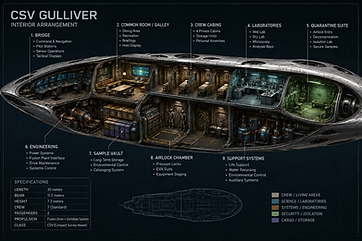
INTERIOR ARRANGEMENT · 9-SECTION SCHEMATIC
Collective Accomplishments
Together, the Gulliver crew:
- Completed the survey of seventeen stellar systems.
- Surveyed a terrestrial world, gas giant, two moons, and an additional body within each planned system where local architecture allowed.
- Documented hundreds of representative organisms.
- Confirmed a vertically continuous gas-giant biosphere.
- Expanded Orphetuology through repeated classification corrections.
- Survived armed confrontations, theft attempts, food shortages, equipment failures, parasites, predatory wildlife, and a Gorbillian dead pocket.
- Restored a critical assimilator using improvised replacement parts.
- Developed procedures for converting approved alien biological material into Grubox feedstock.
- Avoided an unnecessary battle with a Leviathan defending its young.
- Identified Scatterglass as a distributed conscious organism.
- Documented RP-7-G without inventing an unsupported explanation.
- Completed the rogue-planet objective under KAVOE escort.
The final journal emphasizes that the mission's real legacy is a record not only of organisms, but also of errors, infections, frightened animals, damaged machinery, questionable decisions, and people working with incomplete information.
Shared Crew Concerns
Despite completing the mission, the crew returns with several unresolved concerns:
- The expedition has lost much of its original technological and logistical redundancy.
- One Grubox remains unreliable.
- Twenty-seven Maganda Foods packs were never recovered.
- Two Vertikron rifles are now in the possession of probable pirates.
- Gorbillian dead pockets remain unexplained.
- Alien organisms may infect humans without any shared evolutionary history.
- Scatterglass's communication mechanism remains unknown.
- The biological, technological, or conscious nature of RP-7-G remains unresolved.
- The expedition's success may encourage future teams to enter equally dangerous environments without comparable experience.
- Future researchers must avoid treating classification as ownership or permission to collect.
The mission proved that advanced technology could reduce risk, but never eliminate uncertainty. The Gulliver survived because its specialists learned to rely on one another when their instruments, assumptions, and individual areas of expertise were no longer sufficient.
Reader Discussion
0 comments
No comments yet. Be the first to discuss this story.

