

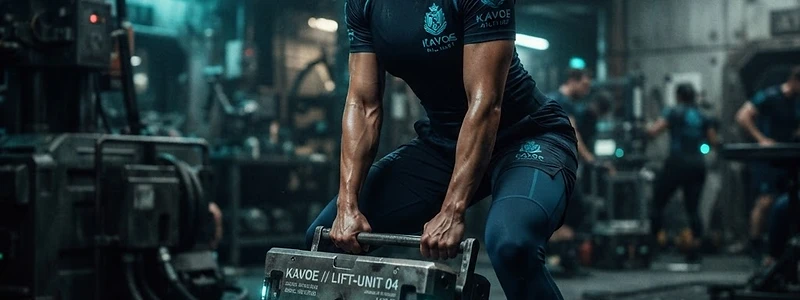
Light Iron Block 20-Rep Speed Test
Twenty floor-to-overhead repetitions against the clock: repeated-load muscular endurance and explosive work rate.
OVERVIEW
Every candidate must complete exactly 20 valid floor-to-overhead-to-floor repetitions. Male candidates use a 15-pound (approximately 6.8 kg) iron block; female candidates use a 10.5-pound (approximately 4.76 kg) block. Because the female apparatus is approximately 30 percent lighter, male and female candidates use the same completion-time standards. The candidate must complete the twentieth valid repetition in under 30.00 seconds to pass. A time of exactly 30.000 seconds or slower is a failure.
Scoring Summary
MALE
Measured in: completion time
FEMALE
Measured in: completion time
Standard scale: 10–30 points. No Extended Performance Scale — capped at 30 points.
Event Details
01Point System
The event is a fixed-work timed test: repetition count does not vary, because all candidates must complete 20 valid repetitions. The slowest passing performance earns 10 points, and a completion time of 15.00 seconds or faster earns the maximum standard score of 30 points. Between these anchors, each 0.75-second improvement corresponds to one additional point. The standard event maximum is 30 points.
02Definition of a Valid Repetition
A valid repetition begins with the iron block resting completely on the floor, proceeds through a verified overhead extension, and ends only when the block physically returns to the floor. The candidate does not have to release the block or pause between repetitions. Once valid floor contact is registered, the next repetition may begin immediately. The required sequence is therefore FLOOR → LIFT → OVERHEAD → EXTENSION → FLOOR. The floor contact completing the twentieth valid repetition stops the official clock.
03Starting Position and Stance
Before the start signal, the block rests flat within the marked lifting zone directly in front of the candidate. The candidate's feet must be approximately shoulder-width apart, defined for PAT purposes as a stance between 0.8 and 1.2 times the candidate's measured shoulder width. Both feet must remain within a calibrated stance box throughout the test, although normal heel rise is permitted. Small natural adjustments within the box are allowed, but a foot leaving the authorized area invalidates the repetition then in progress.
04Spine and Body Alignment
The candidate may bend the knees and hips and may use coordinated leg drive, hip extension, torso movement, and arm movement to accelerate the block. The spine is not required to remain perfectly vertical, but it must remain within the approved neutral-alignment envelope. Excessive lumbar rounding, uncontrolled twisting, severe lateral bending, or excessive backward hyperextension during the overhead phase constitutes a form violation. This permits fast, natural lifting mechanics while preventing candidates from gaining speed through unsafe load transfer.
05Overhead Extension Standard
The block must enter the standardized overhead sensor zone on every repetition. At the top of the movement, both arms must achieve at least 95 percent of the candidate's measured full elbow extension. The candidate may use momentum and leg drive because this is a speed-and-repeated-work event rather than a strict weightlifting exercise. Partial presses, incomplete arm extension, or failure to enter the overhead zone do not count as valid repetitions.
06Floor-Contact Standard
After verified overhead extension, the candidate must return the block until its lower surface physically contacts the test floor. Lowering the block close to the floor without contact does not complete the repetition. The floor sensor and block sensor must register valid contact before the next repetition can begin. No dead stop is required: the candidate may immediately reverse direction after valid contact and begin the next lift.
07Invalid Repetitions and Timing
A repetition does not count if the candidate fails to touch the floor, fails to enter the overhead zone, fails to achieve the required arm extension, moves a foot outside the stance area, rests or supports the block against the body, or exceeds the permitted spinal-alignment envelope. There is no separate time penalty for an invalid repetition. Instead, the repetition is rejected, the clock continues to run, and the candidate must perform another valid repetition to reach the required total of 20. Timing begins on the official start signal and stops only when floor contact completes the twentieth valid repetition.
08What the Event Measures
The Light Iron Block 20-Rep Speed Test measures repeated-load muscular endurance, explosive work rate, coordination, pacing, movement efficiency, and the ability to maintain precise technique while working rapidly. It differs from the Heavy Iron Block Overhead Hold because it rewards repeated movement rather than sustained static force. The relatively light apparatus allows candidates to move quickly, while the strict floor, overhead, stance, and alignment standards prevent partial repetitions from producing artificially fast scores.
09Training Guidance
Effective preparation includes repeated floor-to-overhead lifting with light and moderate loads, full-body power exercises, technique practice, repeated-load circuits, and ordinary KAVOE SWORT. Candidates should train smooth transitions between floor contact and upward acceleration rather than pausing unnecessarily between repetitions. Practice should emphasize safe spinal alignment, stable foot position, full arm extension, breathing rhythm, and maintaining technique as speed increases. Because invalid repetitions consume time without adding to the count, technical consistency is as important as raw speed.
PREVIOUS EVENT
Heavy Iron Block Overhead Hold
NEXT EVENT
Dash Test

